
Safety and compliance
Toy safety, checked by product and market
Compliance is a product-level process. Toy safety depends on what the product is, how it is used, and where it will be sold.
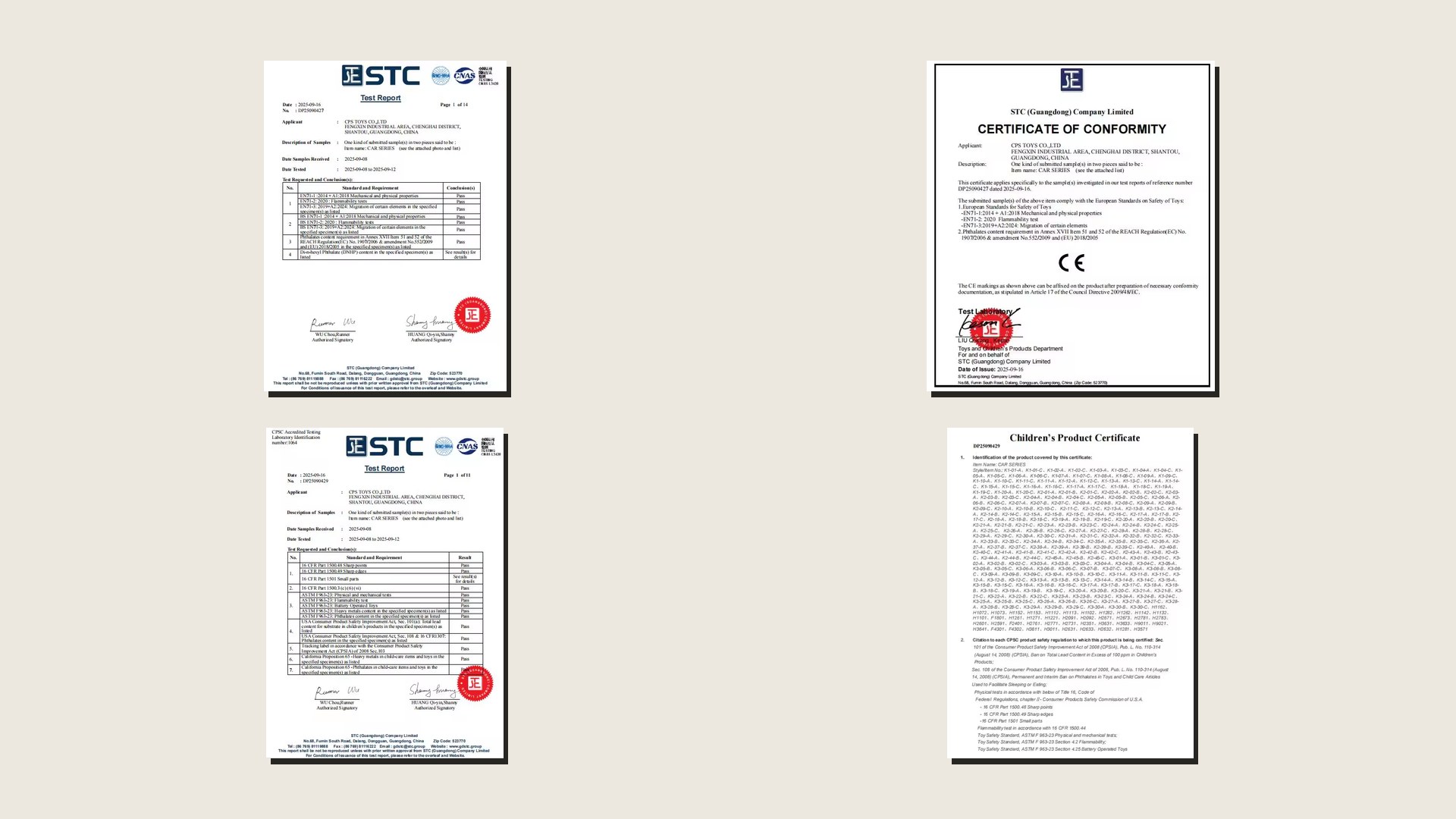
Safety is engineered at the SKU level
Toy safety is a product-by-product discipline: what the item is, which age plays with it, which market it lands in. The same cartoon water gun may need nothing beyond EN71 for Europe and a tracking label for the US — while its electric sibling adds IEC 62115 electrical testing and battery transport documents.
Safety review checklist per SKU
| Check | Applies to | Standard route |
|---|---|---|
| Small parts and sharp edges | All toys for under-3s; all toys generally | EN71-1 / ASTM F963 mechanical tests |
| Flammability | Plush, paper, textile contact materials | EN71-2 / ASTM F963 |
| Heavy metals migration | Painted, printed and mouthable parts | EN71-3 / CPSIA lead limits |
| Phthalates | Soft plastics and mouthable items | REACH / CPSIA 0.1% limits |
| Electrical safety | Battery-powered toys, chargers | EN IEC 62115 / IEC 62115, UN38.3 |
| Age grading and warnings | Every SKU, per market language rules | EN71 marking / CPSIA tracking label |
Water, projectiles and magnets get extra scrutiny
Water toys are play items, not flotation or life-saving equipment — warnings state this. Soft-dart and blaster lines are checked for projectile energy and tip softness. Magnetic toys are reviewed for small-magnet ingestion limits before we quote them for any market with children under 14 in scope.
In-house bench, third-party reports
Our QC bench runs the daily checks — push-pull force, drop tests, small-parts cylinder, sharp-edge probes, color and torque. Formal market certificates come from accredited third-party labs (SGS, Intertek, Bureau Veritas) so your customs file carries a name authorities recognize.
Next step