
Prioritize physical samples for light-up bow-and-arrow sets and handheld pop games, where the play mechanism and presentation cannot be judged from a listing alone. For mixed carton toys wholesale buying, sample a dinosaur swallowing-car set if it fills a vehicle-play slot; defer a simple silicone push-bubble reference only when an unchanged, previously approved version already covers the purchase. Approve the first sample against the agreed written specification—not against itself—and retain it as a production reference only after approval.
A reference earns a sample when handling it can resolve a purchase-critical question: does the mechanism work as specified, is the finish acceptable, does the size suit the assortment, and does the agreed packaging present the complete product? A duplicate assortment role, by contrast, is a reason to drop the reference before spending on samples.
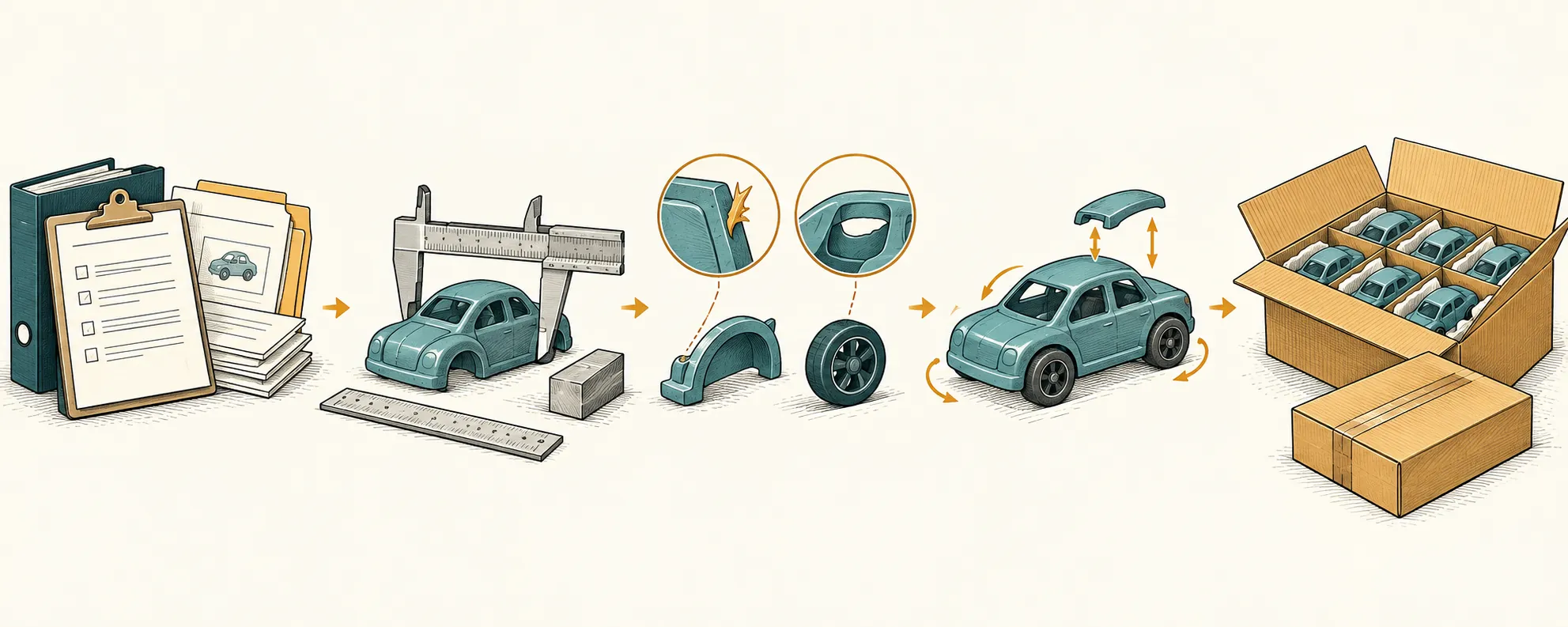
Which references should be sampled now, deferred or dropped?
| Light-up bow-and-arrow sets | References TW305768–TW305771 | Recorded: plastic; target and suction-cup arrows; display box; reference MOQ 240; 24 units per carton. Recommended decision: approve sampling now for an outdoor-play slot. Inspect the bow action, supplied arrows, suction-cup condition, target, lighting and display-box fit against the agreed configuration. Ask which construction, accessories and packaging distinguish the references before deciding whether one sample can represent more than one version. |
|---|---|
| Handheld light-up pop game | Reference TW291367 | Recorded: handheld pop-fidget game; ABS material entry; single-item packing; reference MOQ 240. Recommended decision: approve sampling now if a light-up handheld game fills the sensory assortment slot. Check the agreed push sequence, reset behavior and lighting, rather than assuming functions from the product name. Request the operating instructions, exact included components, retail-pack format, inner-pack arrangement and units per carton. Keep the mixed-order packing decision open while sampling proceeds. |
| Silicone push-bubble fidget | Reference TW233580 | Recorded: silicone push-bubble toy; OPP bag; reference MOQ 300; 100 units per carton. Recommended decision: defer a new sample only for an unchanged repeat with a suitable retained reference and written specification. Otherwise sample it to compare bubble action, dimensions, surface finish and bag presentation. Drop it from this shortlist if it merely duplicates an assortment role already covered. |
| Dinosaur swallowing-car play set | Reference TW304480 | Recorded: plastic dinosaur-and-car play set with mini dinosaur figures and sliding vehicle play; tool-box packing; reference MOQ 48; 48 units per carton. Recommended decision: sample when the vehicle-play slot is required. Follow the agreed play sequence to check vehicle movement and the swallowing-car action, reconcile the component count, and check that the set fits and closes in its tool-box packaging. |
When can one sample represent several references?
One sample can support shared checks only when the supplier identifies the shared construction and the buyer records which differences still require separate review.
For the bow-and-arrow family, ask for a reference-by-reference comparison of the bow mechanism, arrows, target, lighting, dimensions and packaging. If those features differ, sample the affected versions rather than extending approval by appearance alone. If only artwork differs, review each artwork version separately while documenting the limits of the shared physical approval.
For replenishment, request confirmation of changes since the last approved version. A retained sample complements the specification and change records; it cannot reveal an undisclosed change by itself.
What should the first physical sample be compared with?
Compare the first sample with the agreed written specification and design requirements before designating any object as the approved production reference.
Define the required function, component list, material descriptions, dimensions, finish, packaging and artwork before review. Set any commercial screening tolerances or operating repetitions in advance as buyer-defined criteria—not legal standards or predictions of return rates. An attractive sample is not a substitute for an agreed target.
After the sample passes, identify and sign or seal the retained reference, then link the purchase order and inspection checklist to the same specification revision. This is a practical approval method recommended in China Toys Wholesale Market.
How should a bow-and-arrow sample be inspected?
| Contents and version | Compare with: the agreed component list and design revision. Observe: supplied bow, arrow quantity and type, target and any agreed accessories. Failure signal: a missing component or a different configuration. Next decision: defer approval, reconcile the version and request the correct contents or a corrected sample. |
|---|---|
| Bow action, lighting and suction-cup behavior | Compare with: the agreed operating instructions and functional requirements. Observe: whether the mechanism completes its intended action, the specified lighting operates, and the suction-cup arrows behave as agreed on the designated target. Failure signal: jamming, intermittent lighting or failure to perform the agreed action. Next decision: record the condition, request correction and repeat the affected checks on the revised sample. |
| Materials, assembly and finish | Compare with: the component-level material specification, finish requirements and drawings. Observe: visible molding defects, cracks, rough edges, loose-looking joints, inconsistent printing or incomplete assembly. Failure signal: construction or finish outside the agreed requirements. Next decision: defer approval and identify the affected component. Appearance and hand feel cannot verify polymer composition or establish safety. |
| Dimensions and fit | Compare with: the specified dimensions and buyer-agreed tolerances. Observe: measured bow, arrow and target dimensions, plus component fit. Failure signal: a measurement outside the agreed limit or parts that do not fit as specified. Next decision: request correction; accept a revised dimension only through a documented specification change. |
| Display-box presentation | Compare with: the agreed packaging layout, contents arrangement and artwork revision. Observe: whether the complete set fits, remains presented as intended and allows the box to close without forced bending. Failure signal: concealed contents, incorrect artwork, crushed components or poor fit. Next decision: request a packaging correction and recheck the packed sample. |
What belongs in the sample-decision worksheet?
| Reference identity and assortment role | Enter the catalog reference, product description, selected configuration and intended assortment slot. State the purchase-critical question the physical sample must resolve. |
|---|---|
| Recorded packing and commercial confirmation | Carry forward the catalog packing, reference MOQ and carton quantity where recorded. Request the current MOQ, inner-pack arrangement and whether the proposed mix uses separate single-reference cartons or an agreed within-carton assortment. For the handheld pop game, obtain units per carton before approving the packing plan. |
| Sample-order decision | Choose approve sampling, defer or drop. Attach the reason and open questions. Before dispatch, confirm the exact version, sample availability, sample cost, courier terms and what packaging will accompany it. |
| Sample identity and target revision | Assign a received-sample ID and receipt date. Record the supplier's version identification, written specification revision, design requirements, component list, instructions and packaging/artwork revision. |
| Specified target versus observation | For every check, record the specified target, actual observation or measurement, pass/fail disposition and supporting notes. Add photographs where useful; a missing photograph alone does not invalidate other identifiable inspection evidence. |
| Product approval and responsibility | Choose approve, defer pending correction or drop. State conditions explicitly, identify the responsible approver and approval date, and assign the retained sample's location and signed or sealed identity only after approval. |
| Correction and closure | Give each discrepancy an ID, correction owner and due date. Link the replacement sample or revised document to the original record; record recheck results, closure date and closing approver. |
What remains open after sample approval?
Sample approval establishes acceptance of the reviewed version; it does not establish regulatory safety, age suitability, current commercial terms or conformity of later production.
Keep destination-specific document review separate from the functional and appearance record. Ask a qualified reviewer to assess applicable requirements and whether test reports cover the intended product, construction and production version. A similar-looking toy's report does not automatically cover the purchase, as the Wholesale Toys from Yiwu guide cautions. A buyer's hand check neither determines age grading nor replaces the specified laboratory testing.
Bulk comparison is the next stage. Compare production with the written specification, approved changes and retained sample, checking the ordered quantities, functions, finish, dimensions, packaging and agreed assortment. A successful sample does not prove that mass production will match; inspection checks order conformity rather than replacing laboratory testing. China Toys Wholesale Market
Keep the mixed purchase order open only for references that still have a clear assortment role and a closable approval path. Defer correctable discrepancies. Drop references that fail essential requirements after review or add no useful role to the mix.