
Select RC cars, drones, and die-cast toys by buyer scenario first, not by catalog order: decide indoor floor play, outdoor terrain, or shelf-display collectible, then let that scenario set the material, the test you request, and the MOQ you accept. A 1:24 die-cast car at 24 pcs and a plastic ramp racer at 48 pcs solve completely different retail problems, and treating them as one "vehicle toy" line is how ranges end up with dead stock.
This page gives you the decision order a procurement lead can actually use in an RFQ: scenario → material → test list → MOQ band → production cluster. Drones are covered as a separate sourcing boundary, because the electronics and compliance stack is not the same as a die-cast car.
Key Takeaways
- Scenario beats category: an outdoor RC battle car and a shelf-display 1:24 die-cast model both sit under "vehicle toys," but only one needs UV and drop testing specified in the RFQ.
- Die-cast is the low-MOQ, high-margin-per-unit end of the range — catalog examples run 24 pcs at 7.2 USD — while plastic play sets such as painting kits sit at 360 pcs and 1.4 USD. Mix both to balance cash flow against shelf appeal.
- Ask the factory for the test, not the adjective. "Durable" is not a spec; UV exposure, drop height, and material wall thickness are.
- Drone sourcing is a separate RFQ: battery, motor, and radio compliance documentation must be confirmed before you bundle quadcopters into a toy container.
- Production cluster tells you which factory profile to shortlist: injection-molded plastic toys concentrate in Chenghai, Shantou; wooden toys in Yunhe; plush in Yangzhou; general merchandise in Yiwu.
Use Case, Material to Ask, and Test to Request
| Indoor toddler floor play | Material to ask | Plastic (ABS or PP), confirm wall thickness and no small detachable parts | |
|---|---|
| Indoor toddler floor play | Test to request | Small-parts cylinder test and drop test per destination standard | |
| Outdoor terrain / sand / gravel | Material to ask | Plastic chassis plus zinc alloy where impact resistance matters | |
| Outdoor terrain / sand / gravel | Test to request | Drop test, UV/color-fastness check, motor and gearbox life run | |
| Poolside / water-play season | Material to ask | Plastic with UV-stabilized colorant; avoid unsealed battery compartments | |
| Poolside / water-play season | Test to request | Water ingress check and color-fade check after sun exposure | |
| Shelf-display collectible | Material to ask | Zinc alloy body with plastic detail; ask for paint adhesion spec | |
| Shelf-display collectible | Test to request | Paint adhesion (cross-hatch), drop test on window-box packaging | |
| Gift / impulse checkout item | Material to ask | Plastic or zinc alloy depending on price point | |
| Gift / impulse checkout item | Test to request | Packaging integrity and battery compartment security if sound/light is included | |
| Battery-powered RC (any use) | Material to ask | Confirm battery chemistry, charger type, and connector standard | |
| Battery-powered RC (any use) | Test to request | Battery and charger documentation for the destination market; ask for the report, not a summary |
Which buyer scenario should decide the range, and why does it beat category logic?
The buyer scenario decides the range, because two products in the same category can carry opposite risk profiles. A die-cast 1:24 model with simulated sound and lighting is a display-and-collect item: it lives on a shelf, gets handled gently, and its main retail job is gift appeal and shelf presence. A bumper-car RC battle set is the opposite — it is bought to be crashed into things, so impact resistance, motor life, and battery security drive returns, not paint finish.
Write the scenario down in one line before you open any supplier catalog: who plays with it, where, for how long, and what breaks first. That single line tells you which material to ask about and which test to put in the RFQ. If you cannot write it, you are not ready to shortlist SKUs — you are just collecting photos.
What fails outdoors, and what do you ask the factory to test?
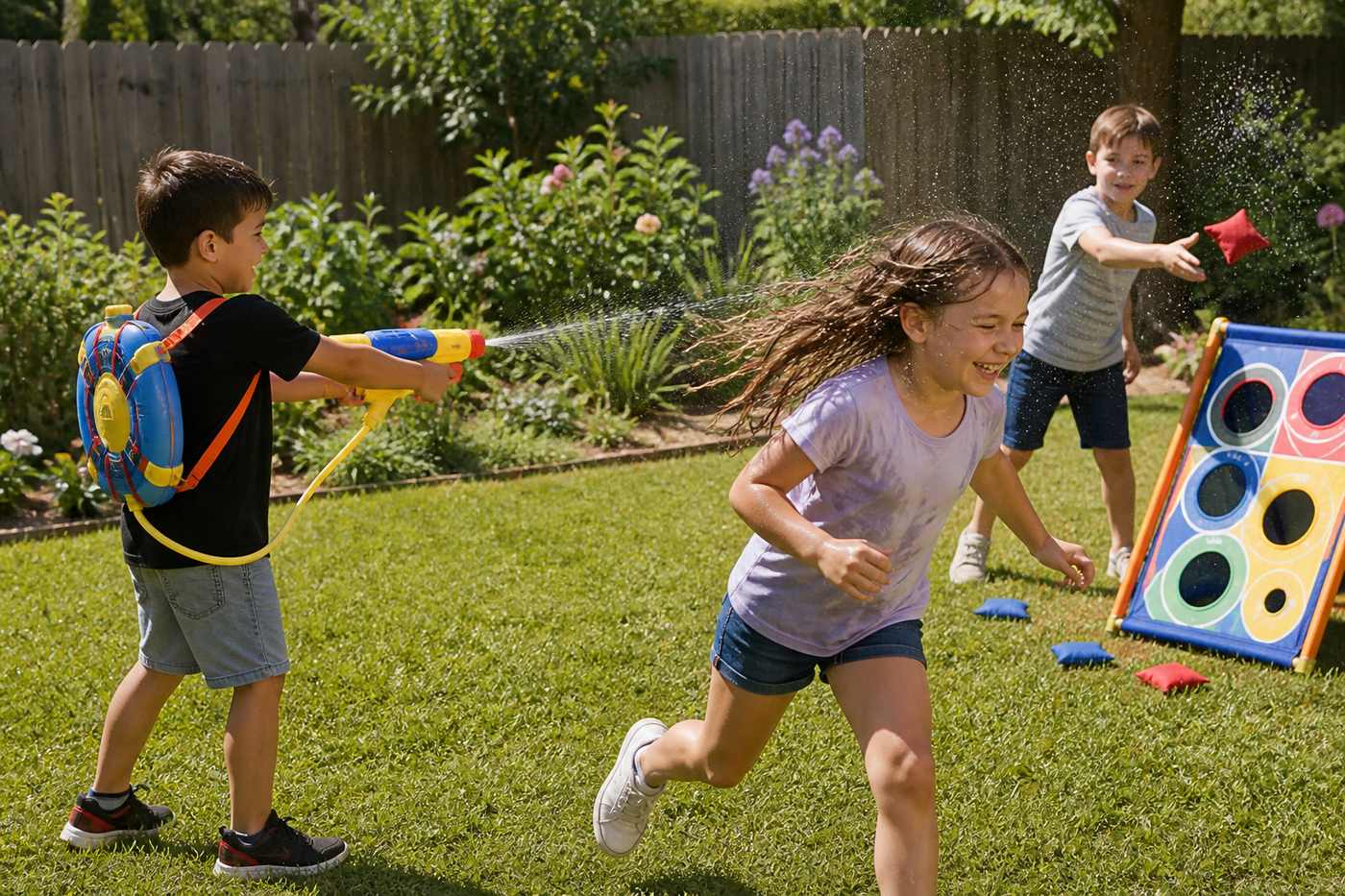
Outdoor failure modes are predictable: sun fade, chlorine or pool-water exposure, impact fracture from drops, and thin-wall or poor colorant leading to cracking and patchy color. Each maps to a specific question you put in writing to the factory rather than a general request for "good quality."
For sun fade, ask which colorant or UV stabilizer is used in the masterbatch and request a color-fastness check after accelerated exposure. For pool or water play, ask whether the battery compartment is sealed and request a water-ingress check — this is where cheap water toys fail fastest. For drops, ask for the drop height the design was tested to and the wall thickness at the impact points; thin walls at the wheel mounts and bumpers are the usual crack sites. For color consistency across a large order, ask about masterbatch control and whether color is matched to a physical sample you approve.
If the supplier has no number for any of these, that absence is the answer. Put the test you want into the RFQ and let the factory quote against it, instead of accepting a spec sheet written after the fact.
Where are RC cars, die-cast models, and plastic vehicle toys usually produced?
Injection-molded plastic toys — including RC car bodies, ramp racers, and most vehicle play sets — concentrate in Chenghai District, Shantou, Guangdong, which is widely described as China's toy manufacturing cluster. That matters to you because the cluster's strength is mold-making speed and component supply, so a Chenghai factory can usually iterate a body shell faster than a general trader can.
Die-cast models with zinc alloy bodies are also commonly produced in the same southern Guangdong cluster, where alloy casting and painting sit near the plastic and electronics supply. When your range needs wooden vehicles or wooden play sets, the sourcing conversation shifts to Yunhe in Zhejiang. Plush vehicle and character toys come out of Yangzhou in Jiangsu. General merchandise and mixed small-item orders are typically assembled through Yiwu, which is a trading and consolidation hub rather than a single-category manufacturing town.
Use the cluster to set expectations, not to rank factories. A Chenghai address does not certify a supplier; it only tells you which questions are reasonable to ask and how fast a mold or color change should be quoted.
Which SKUs work as the opening order for a new vehicle-toy range?
Start with the low-MOQ, high-perceived-value end. A 1:24 scale die-cast model with simulated sound and lighting, in a window box, at 24 pcs MOQ and around 7.2 USD, lets a buyer test shelf appeal across several body styles without tying up working capital. That is the classic range-opener: multiple designs, one MOQ band, one container line. Two concrete catalog examples in this band are the 1:24 scale die-cast HUMMER model and the 1:24 scale die-cast Cullinan model, both zinc alloy plus plastic with sound and light functions.
Then add one active-play SKU to prove the higher price point. A two-player RC battle set at 60 pcs MOQ and about 12.29 USD with a 25–35 day lead time tests whether your channel actually sells interactive play, not just display models. If it moves, expand the RC line; if it sits, you learned that for the cost of one pallet.
Round out with a low-price impulse item. A plastic ramp racer set at 48 pcs and about 1.61 USD gives you a checkout-counter or bundle-filler price point, and a sliding ambulance truck at 108 pcs and about 3.2 USD covers the toddler vehicle slot. The point is not to buy everything — it is to buy one SKU per scenario so your first order doubles as a test.
How should you handle drone sourcing inside a toy range?
Treat drones as a separate RFQ, even if your vehicle range comes from the same cluster. The compliance stack differs: battery chemistry, charger safety, radio equipment, and motor reliability all need documentation that a die-cast car does not, and the destination market may regulate them differently from toys. Bundling quadcopters into a toy container without confirming that documentation is a customs risk, not a convenience.
Practically: source drones from a supplier that already exports them, ask for the battery and charger documents specific to your destination market, and keep the drone purchase order separate from the vehicle-toy PO. If you are not ready to manage that, leave drones out of the first range and revisit them once your vehicle line is stable.
How we picked the decision criteria
We built this framework from the attributes a buyer can actually verify before contacting a supplier: buyer scenario, material class, MOQ band, lead time, and the test that maps to the failure mode. Every product figure quoted here comes from a supplier catalog record — MOQ, material, price, and lead time are stated exactly as listed, and where a spec was not provided we say so rather than filling the gap.
We deliberately did not rank factories or publish a "best supplier" list. Cluster-level guidance (Chenghai for injection-molded plastic, Yunhe for wood, Yangzhou for plush, Yiwu for general merchandise) tells you which factory profile to shortlist; it does not certify any individual supplier. Any certification, test result, or capacity claim should be confirmed per supplier and per destination market before you place a deposit.
What should go into the RFQ before you contact a supplier?
Put the scenario, the material, the test, and the MOQ band in writing, and ask the factory to quote against each line. A working RFQ for this range has six lines: target scenario and age; material and wall thickness or alloy composition; the specific test you want run and the report you want to see; packaging format (window box, blister, or bulk) because format drives MOQ; MOQ per design and whether mixed colors or mixed designs are allowed; and lead time plus the sample approval step.
Leave price for last. If you lead with price, you get a cheaper material and a shorter test list back. If you lead with the test, you get a real quote you can compare across suppliers — and you find out quickly which factories can actually answer the question.
FAQ
What MOQ should I expect for die-cast cars versus plastic vehicle play sets?
Expect a much lower MOQ on die-cast than on plastic play sets. In the catalog referenced here, 1:24 die-cast models are listed at 24 pcs MOQ, while a plastic ramp racer set is 48 pcs, a dinosaur painting-and-pull-back set is 360 pcs, and a long-range water gun is 480 pcs. Always confirm the MOQ per design and whether mixed colors or designs count toward the same threshold, since packaging format can raise the minimum.
Should I put drones in the same purchase order as die-cast and RC cars?
No — keep drones on a separate purchase order. Drone compliance covers battery chemistry, charger safety, radio equipment, and motor reliability, which are different documents from those for a die-cast or plastic vehicle. Confirm the battery and charger documentation required for your destination market before committing, and only bundle after that is verified.
Which tests should I request for toys that will be used outdoors?
Request UV or color-fastness testing for sun fade, a water-ingress check for pool and water play, and a drop test at a stated height for impact resistance. Also ask about wall thickness at the wheel mounts and bumpers, and about masterbatch or colorant control if color consistency across a large order matters. If the factory cannot state a drop height or colorant type, treat that as a gap to resolve before ordering.
Where are these products usually manufactured?
Injection-molded plastic vehicle toys and die-cast models commonly come from the Chenghai District cluster in Shantou, Guangdong. Wooden toys are typically sourced from Yunhe in Zhejiang, plush from Yangzhou in Jiangsu, and mixed general merchandise through Yiwu. The cluster tells you which factory profile to shortlist — it does not certify any individual supplier, so verify capability per factory.
What lead time should I plan for, and when do I place the order?
In the catalog referenced here, several vehicle and RC items list a 25–35 day lead time, so add sample approval, production, and shipping on top of that. For seasonal outdoor and water-play items, work backward from your retail window rather than forward from the order date, and confirm the lead time per SKU in writing because it varies by item.
How do I compare two suppliers quoting the same die-cast car at different prices?
Compare the specification, not the number: alloy-to-plastic ratio, paint finish and adhesion, sound and light function, packaging format, and the test report attached to the quote. A lower quote often reflects a thinner alloy body, bulk packaging instead of a window box, or a shorter test list. Ask both suppliers to quote against the identical spec sheet and test list so the prices are actually comparable.
Sources
- Chenghai Toy Market Shantou: Complete Guide to China's Toy Manufacturing Capital
- China Flying Rc Toys, Flying Rc Toys Wholesale, Manufacturers, Price Made-in-China.com
- China Mini RC Toy Price, Mini RC Toy Price Wholesale, Manufacturers, Price Made-in-China.com
- China Rc Mini Toys, Rc Mini Toys Wholesale, Manufacturers, Price Made-in-China.com
Related Products & Categories
Request a Quote for Your Vehicle-Toy Range
If you have defined your buyer scenario and the tests you need, the next step is a spec-matched quote rather than a catalog browse. Send the scenario, material, packaging format, MOQ per design, and test list, and ask for pricing against each line plus the sample approval step.