
Record unresolved options against each product line—not in a general order note—and hold only the lines whose release conditions remain open. In a mixed-carton wholesale toy order, a face-changing cube puzzle and a sound-and-light ambulance serve different assortment roles and have different packing references. Give each its own target, comparison status, responsible owner, closing condition, and approval scope so one accepted product does not accidentally authorize another product’s packaging or carton arrangement.
What must the mixed-order record distinguish?
Separate the product selection, retail package, and shipping-carton arrangement before approving the order. The face-changing wooden cube puzzle can fill the matching-game part of an assortment; the sliding ambulance adds a vehicle-play option with sound and light. Their inclusion on one purchase order does not establish that they can share a shipping carton.
Write the requested packing arrangement explicitly: separate product cartons, mixed shipping cartons, or a proposed split awaiting approval. For mixed cartons, request the quantity of each product inside each carton and a carton identification plan. Keep that packing decision separate from the total quantity ordered for each product.
Use the October 9, 2026 catalog references below as planning targets, not current quotations. A reference MOQ is a minimum-order reference, not an order multiple; a units-per-carton figure does not by itself require full-carton purchasing.
How should accepted, different, and unresolved be used?
Mark each comparison field Accepted, Different, or Unresolved, and state exactly what the status covers. Accepted should mean that the identified response or observation meets the recorded target—not merely that someone has read the catalog.
Different means a specific alternative has been identified and needs a disposition. Unresolved means the choice or confirmation remains open. For example, if a display box is offered against a color-box target, record the offered package as Different and retain the original target until the buyer accepts the change or rejects it. This three-status approach adapts the comparison method in the Buyer handover checklist.
| Record identity and revision | Link each option record to the purchase-order number and line number. Identify its revision and reference date; retain the previous revision when a choice changes. |
|---|---|
| Target versus observation | Keep the requested product, quantity, package, and carton arrangement in target fields. Put the supplier response, sample observation, or packing confirmation in separate comparison fields, with its document or sample reference. |
| Decision and ownership | For every open choice, record its status, whether it blocks release, the person responsible for obtaining the answer, the responsible approver, and the milestone by which it must close. |
| Closure | Record the final choice, supporting reference, approver’s name, approval date, and resulting record revision. Do not replace the open question with an unexplained check mark. |
Wooden Face-Changing Cube Puzzle
| Product identity | Catalog identifier: TW280236. Face-changing cube expression-matching puzzle. Attach the purchase-order line and option-record revision when the order is created. |
|---|---|
| Assortment decision | Accepted for the planning example: matching-game product line. Keep its quantity and approval separate from the vehicle line. |
| Material and product comparison | Target: wooden face-changing cube puzzle. Status: Unresolved for current-order approval. Procurement owner: obtain an identified sample or product confirmation; buyer approver: record the comparison and disposition. |
| Retail package | Target: color box. Status: Unresolved. Packaging coordinator: obtain the proposed order-package reference and identify its revision. Close when the buyer accepts that specific package. |
| Quantity and shipping pack | Catalog baseline: reference MOQ 200; 100 units per carton. Status: Unresolved for current terms. Procurement owner: confirm the requested quantity, current minimum, carton count, and any partial-carton arrangement in writing. |
| Line decision and closure | Planning decision: Hold release. Responsible approver: assigned line buyer. Close the product, package, quantity, and shipping-pack decisions before release; enter the approver’s name, date, and supporting references in the final revision. |
Sliding Ambulance with Sound and Light
| Product identity | Catalog identifier: TW311980. Sliding cartoon ambulance with sound and light. Attach its own purchase-order line and option-record revision. |
|---|---|
| Assortment decision | Accepted for the planning example: vehicle-play product line. Do not substitute another vehicle or remove a stated function without a separate buyer decision. |
| Material and product comparison | Target: plastic sliding ambulance with sound and light. Status: Unresolved for current-order approval. Procurement owner: obtain an identified sample or product confirmation; buyer approver: record the functional comparison and disposition. |
| Retail package | Target: display box. Status: Unresolved. Packaging coordinator: confirm the proposed display-box configuration and selling-unit quantity so a display box is not mistaken for a shipping carton. |
| Quantity and shipping pack | Catalog baseline: reference MOQ 108. Status: Unresolved for current terms and carton arrangement. Procurement owner: request units per shipping carton, the proposed carton breakdown for the requested quantity, and confirmation of any partial-carton option. |
| Line decision and closure | Planning decision: Hold release. Responsible approver: assigned line buyer. Close the product, display-box, quantity, and carton decisions before release; record the approver’s name, date, and confirmation references. |
What can a sample approve while other options remain open?
A sample approval covers only the identified sample and the features actually reviewed; packaging and document decisions can remain open separately. Record whether the piece is stock, developmental, or representative of the proposed order, together with its sample reference and review date.
A stock toy supplied in a temporary bag cannot approve a proposed retail box. Keep separate decisions for product, retail package, shipping pack, and the buyer’s destination-document review. This distinction follows the Buyer handover checklist. Functional or visual acceptance is not safety testing.
When can a line be released, and how does receiving close it?
Release a product line only after its blocking options are resolved and its responsible approver records the decision and date. If one line is ready and another remains on hold, request a revised order confirmation covering the proposed split, quantities, packing, and commercial terms before authorizing partial release.
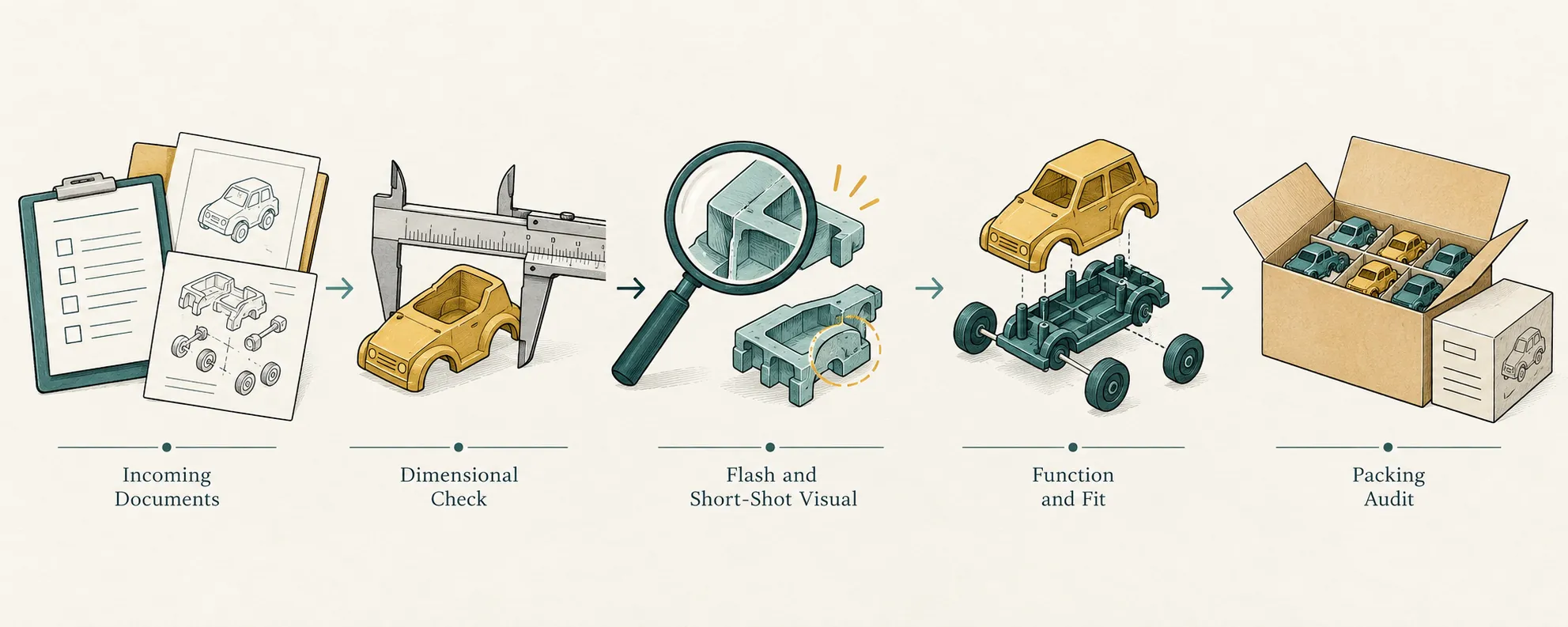
At receiving, compare the delivered product identity, visible features, retail package, and actual carton contents against the approved revision. Record any difference, assign an owner, and close it with a documented acceptance, correction, or rejection rather than silently updating the target.
For replenishment involving a changed source or version, keep remaining stock identifiable and give the first changed delivery a separate receiving reference while it is evaluated. That preserves a usable comparison before units are combined, consistent with the Buyer handover checklist. Carry the final accepted revision into the next reorder; a traceable record supports comparison but does not itself reveal an undisclosed change.