
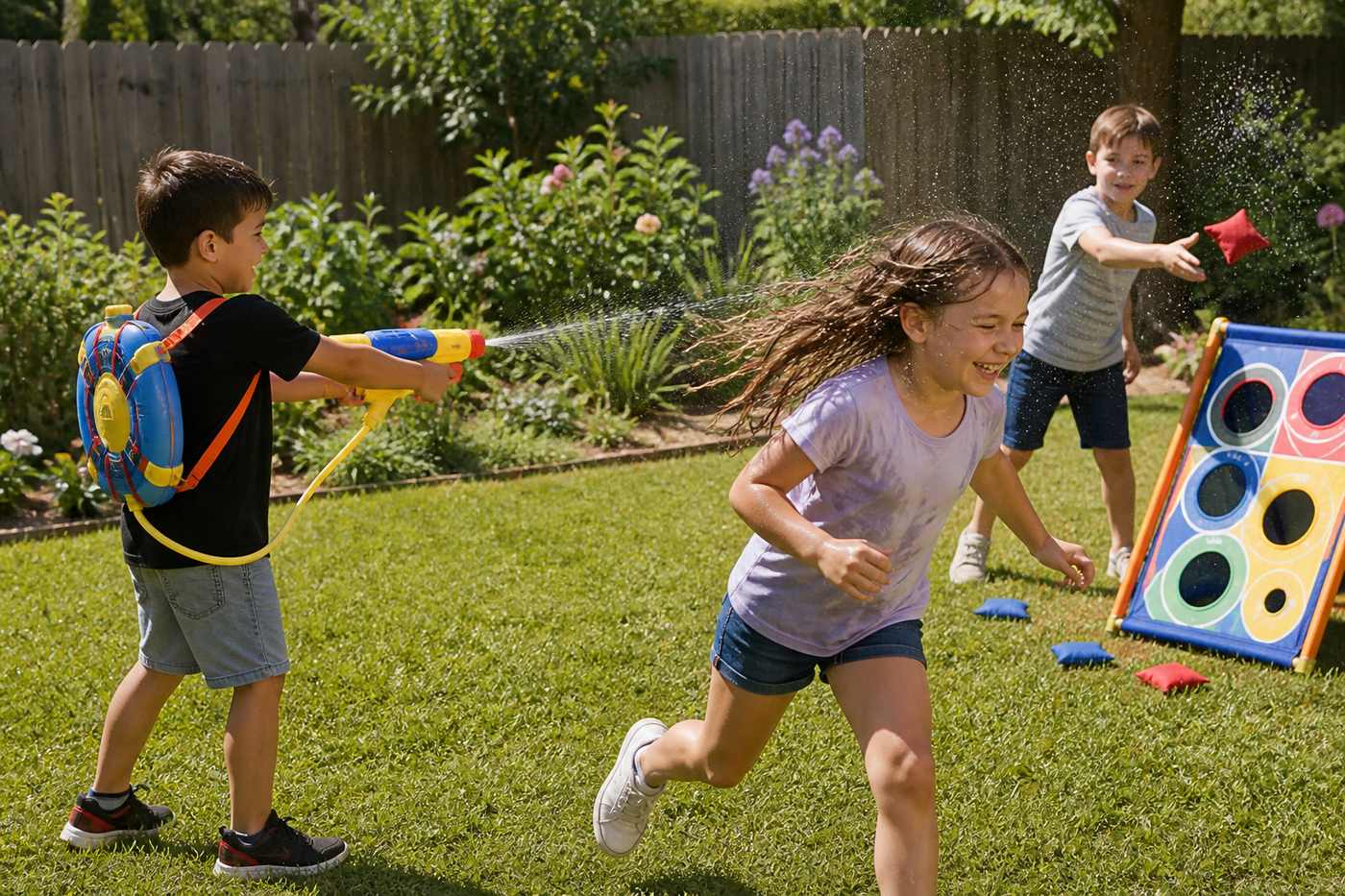
A toy assortment calendar does not predict demand — it sequences commitments, and the buyers who treat it as a forecast are the ones who miss the school window. The calendar's real job is to fix three dates per SKU: when the compliance file must be complete, when the PO must be placed, and when the goods must land. Trend lists, category momentum and licensing news are inputs to those three dates, not substitutes for them.
This page covers how to build that calendar for 2026 across school, summer and holiday windows: which trend signals are worth acting on, how certification and eFiling deadlines gate your order dates, and what to stock when. It is written for importers, distributors and retail buying teams sourcing for US and EU channels.
Key Takeaways
- Build the calendar backward from the shelf-set date, not forward from the factory quote: certification and eFiling lead time, not production, is usually the binding constraint.
- Treat category momentum — educational/STEM, construction sets, plush and collectibles — as a prompt to verify with your own sell-through, never as a demand number to commit against.
- One dated industry headline reports a 14% rise in global toy sales in the first half of 2026; it is a single secondary citation without published methodology, so use it as a directional signal only.
- Holiday-themed SKUs need the earliest placement because the selling window is short — the source guidance for novelty assortments is to order seasonal items early and confirm customization lead time first.
- Every seasonal SKU needs its own certificate file: a CPC is product-specific, and CE marking plus an EU Declaration of Conformity must be matched to the product scope — neither is a factory-wide blanket.
- Novelty formats that ship compact (multi-piece sets, squishy items, small light-and-sound units) protect landed cost and leave more room for retail margin than bulky play furniture.
Seasonal demand matrix for 2026
| School / back-to-school | Window: late-August to early-September start dates are typical across published school calendars, with spring terms restarting in early January | Trend driver: construction, educational and STEM framing | Sourcing implication: place container orders so goods land before the school shelf reset, and complete test files first | Source note: school term dates published by individual schools 2026–27 |
|---|---|
| Summer / outdoor and water play | Window: June to early July school terms end in the published calendars we reviewed, opening the outdoor play season | Trend driver: water and bath play, bubble and light/sound impulse items | Sourcing implication: compact, low-CBM formats; confirm battery and electronics safety before bulk | Source note: school term dates 2026; novelty toy buying guidance 2026 |
| Holiday / Christmas and year-end | Window: short and unforgiving; holiday-themed building sets are the clearest dated example in available material | Trend driver: holiday-themed multi-design sets, display-box merchandising | Sourcing implication: earliest PO date of the year; confirm customization lead time before committing | Source note: novelty toy buying guidance 2026 |
| Licensed / IP-linked assortment | Window: licensing announcements cluster ahead of retail seasons, with deal headlines dated February and August 2026 | Trend driver: continued IP-driven assortment planning | Sourcing implication: confirm licensing status and territory per SKU before inclusion | Source note: licensing news headlines dated 2026 |
| Kidult / collectible and plush | Window: less seasonal than toy-age ranges; runs across the year | Trend driver: collectible and plush momentum, including adult buyers | Sourcing implication: smaller reorder cycles rather than one large seasonal bet | Source note: 2026 market reporting on collectibles and plush segments |
Which trend signals belong in a 2026 assortment calendar?
Only signals that change an order date or a SKU decision belong in the calendar. A dated trade headline reporting a 14% first-half 2026 increase in global toy sales is a useful mood indicator, but it carries no published methodology in the material available and no prior-period baseline, so it cannot size your buy. Use it the way you would use a weather forecast: it tells you to check the sky, not to cancel the shipment.
Category momentum is more actionable than headline growth because it maps to shelf space. Available 2026 market reporting flags educational and STEM toys, construction sets, and plush and collectibles as the higher-momentum segments, with North America holding the largest share and Asia-Pacific growing fastest. That is a merchandising prompt: it says construction and plush deserve a test slot, not that they deserve your whole container.
Licensing is the third signal, and it behaves differently. Deal announcements cluster ahead of retail seasons — the headlines in the available material are dated February and August 2026 — which means IP-linked assortments are planned months before they appear on shelf. If you are buying into a licensed range, licensing status and territory need confirming per SKU before it enters the calendar, not after the PO is cut.
How does compliance timing change your order dates?
Compliance is a calendar item, not a paperwork afterthought, and it usually sits earlier in the timeline than buyers expect. For US-bound children's products subject to Toy rules, third-party testing at a Toy laboratory and a written Children's Product Certificate are required, and both the CPC and supporting test reports must be in English. A CPC is product-specific — it should never be described as a blanket factory certificate — and it must cite each applicable rule and identify the responsible parties.
One dated compliance milestone deserves a hard slot in the 2026 calendar: from July 8, 2026, importers of most regulated consumer products must electronically file certificates of compliance with US Customs and Border Protection through a Partner Government Agency Message Set. If your holiday container clears after that date, the filing is part of the critical path.
For EU-bound goods the gates are different but equally dateable. Toys placed on the EU market must meet the applicable essential safety requirements of Toy Safety Directive 2009/48/EC, and CE marking plus an EU Declaration of Conformity belong to the conformity process and must be matched to the product scope. Note that the General Product Safety Regulation (EU) 2023/988 is a separate legal instrument from the Toy Safety Directive — it is horizontal consumer product safety regulation, not toy-specific, and it keeps distance selling and online marketplace sales in scope.
Two practical rules keep this workable. First, tie every statement to a SKU, a report, a responsible party and a current version — the applicable edition of ASTM F963 or 16 CFR Part 1250 should be read from the current regulation before any report is quoted, because a report must match the product configuration, age grade, material and test edition. Second, age grading and small-part risk are connected: assemblies, detachable accessories and packaging components need the same review discipline as the main product, and tracking information should be permanent and support product identification where applicable.
What should be on the shelf in each window?
School and early autumn reward construction, educational and role-play items that parents buy on purpose rather than on impulse. Construction sets appear repeatedly in 2026 category reporting as a momentum segment, and multi-piece formats give retailers bundling options from a single SKU — a 118-piece snap-build set can be merchandised as one product or split into price tiers.
Summer belongs to water, bath and outdoor play, plus the compact impulse items that live near the checkout. Bath and water-spray formats are the obvious seasonal fit, and compact novelty items — squishy food toys, small light-and-sound units, bubble toys — control freight cost because they consume little carton volume. Anything battery-powered or electronic needs its safety check closed before bulk, not after.
Holiday is where the calendar earns its keep. Holiday-themed building sets are the clearest dated example in available material: multi-design sets with display-box presentation, positioned for a short selling window. The same molds can extend across events — Halloween, Easter, Christmas variants — which is how you amortize tooling across more than one season instead of betting everything on December.
Plush and collectibles sit outside the seasonal rhythm and should be planned on shorter reorder cycles. Collectible and plush momentum is real in 2026 reporting, but it is fad-sensitive, and adult-buyer and kidult ranges behave more like apparel than like toys: small, frequent buys beat one large seasonal commitment.
OEM-relevant examples for this season's calendar
If summer and holiday windows are on your calendar, two formats are worth putting in front of a supplier as OEM starting points rather than as finished picks. Water and bath play is the classic summer volume category, and a floating boat or submarine bath format is the kind of compact, low-CBM item that survives freight math — see the kid bath toy summer floating boat example on our site. For holiday, countdown-format gift sets pair a fidget or squishy component with a calendar structure, which extends the selling window from a single day to several weeks.
FAQ
Is toy demand growing in 2026?
One dated industry headline reports a 14% rise in global toy sales in the first half of 2026, but it is a single secondary citation with no published methodology or prior-period baseline in the material available, so treat it as directional rather than as a planning number. Category reporting separately flags educational/STEM, construction, and plush/collectibles as higher-momentum segments. Confirm against your own sell-through before committing volume.
When should I place my holiday toy order?
Holiday-themed SKUs need the earliest placement of the year because the selling window is short; source guidance for novelty assortments is to order seasonal items early and confirm customization lead time before committing. Work backward from your shelf-set date and subtract production, transit, customs clearance and any compliance filing time — not the other way around.
What certification do I need for toys sold in the US versus the EU?
For US-bound children's products subject to Toy rules, third-party testing at a Toy laboratory and a written Children's Product Certificate are generally required, in English. For EU-bound toys, the applicable essential safety requirements of Toy Safety Directive 2009/48/EC apply, with CE marking and an EU Declaration of Conformity matched to the product scope. Both are SKU-specific — never accept a factory-wide certificate as covering a product.
Does the July 2026 eFiling rule affect my import schedule?
Yes, if your goods are among most regulated consumer products: from July 8, 2026, importers must electronically file certificates of compliance with US Customs and Border Protection via a Partner Government Agency Message Set. Build that filing into the critical path for any container clearing after that date, and confirm the requirement against the current regulation for your specific product scope.
Which categories should I test rather than commit to?
Test the fad-sensitive ones. Collectibles, plush and licensed IP ranges move quickly and depend on trends you cannot control, so smaller, more frequent reorders suit them better than a single seasonal bet. Construction and educational items behave more like repeat categories and can carry a larger commitment, provided the test file is complete first.
How do I keep freight cost from eating my seasonal margin?
Choose compact formats and check CBM before committing. Multi-piece sets, squishy items and small light-and-sound units consume little carton volume; bulky items such as play tents and large furniture-style toys carry materially higher shipping and storage cost, so calculate final landed cost before the PO rather than after the quote.
Sources
Related Products & Categories
Request a Quote
Tell us your destination market, target window and the SKU formats you are considering, and we will come back with a sourcing plan that maps order dates to your shelf-set deadlines — including which compliance files need to be closed before the PO is cut.