
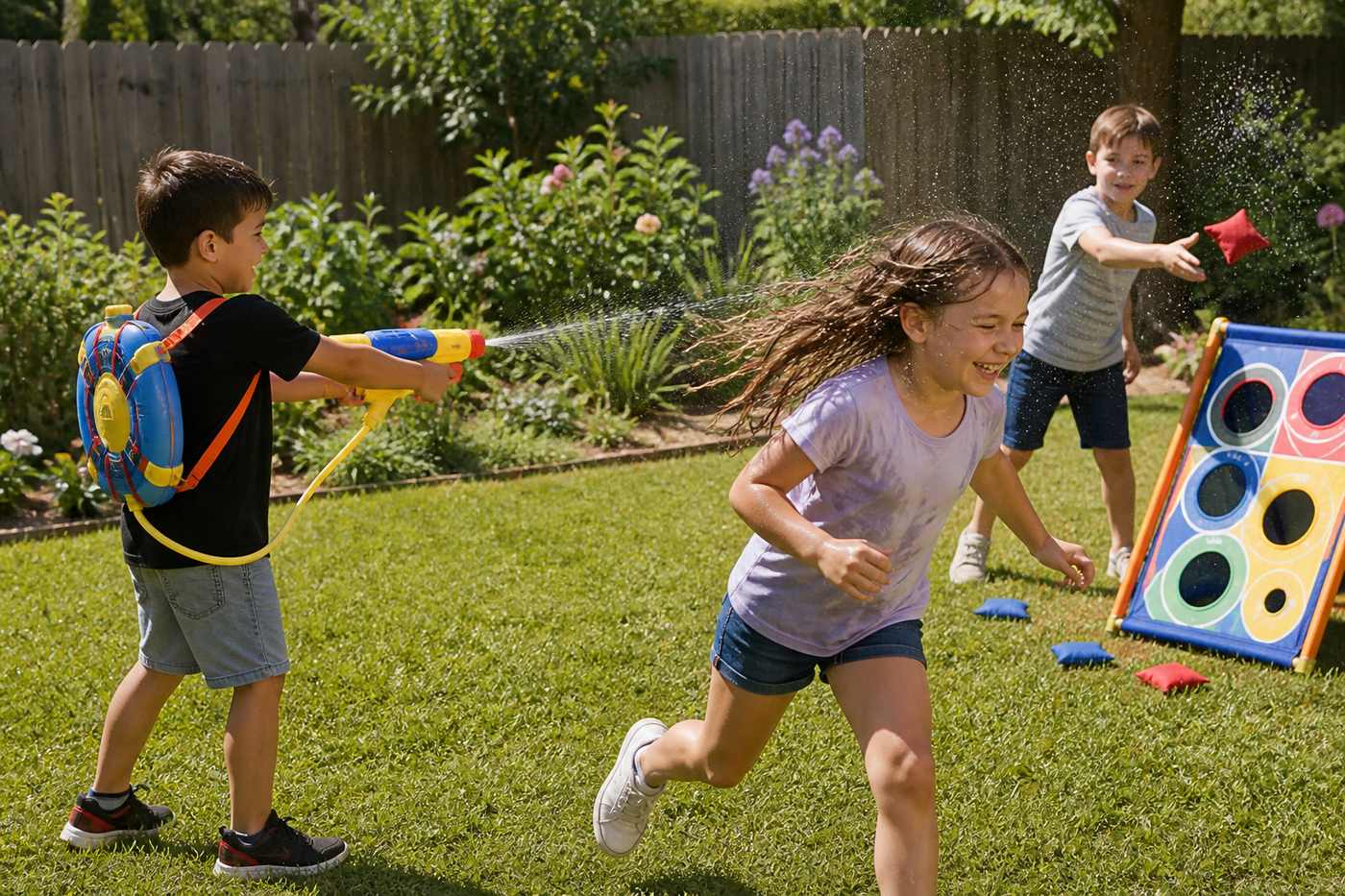
Combine six toy categories in one purchase order by grouping SKUs by buyer scenario first, then checking three compatibility gates before you send the RFQ: MOQ spread, material consistency, and packaging format. A mixed-category order works when the smallest line in the mix is still worth the carton space it occupies. It fails when three of your six categories need different testing regimes, different carton dimensions, or a per-SKU MOQ that quadruples your total buy-in.
What changed for 2026 sourcing is not the categories themselves but the evidence trail. If one SKU is produced across factories or lots, the split should be visible in the order, the carton code, and the compliance documentation. That single requirement reshapes how you build a six-category PO: every category line now needs its own traceable production record, not a blanket certificate covering the container.
Why group toy categories by buyer scenario instead of by product name?
Group by buyer scenario because your retail customer buys a use occasion, not a category label. A parent shopping for a rainy-afternoon activity will pick a pretend-play or creative kit; a grandparent buying a birthday gift gravitates to construction or track sets. Build your six-category PO around product names — "plastic toys, plush toys, wooden toys" — and you end up with six lines that all compete for the same shelf and the same shopper.
Scenario grouping also fixes the internal problem. Your allocation across cleaning pretend play, kitchen pretend play, building and table sets, painting kits, water-play toys, and track or vehicle sets gives you six distinct price points and six distinct play triggers. That spread is what makes a container worth shipping: not six variations of the same impulse buy, but six reasons for a shopper to stop.
Write the shelf tag for each category in one sentence. If two categories produce the same sentence, you have a duplicate, not a category.
Six-category order decisions at a glance
- Scenario grouping beats product-name grouping: six categories should map to six different play occasions, not six variations of one.
- MOQ compatibility is the first kill switch. If one category's minimum is 144 pieces and another's is 12, the low-MOQ line becomes your volume-flex lever and the high-MOQ line becomes your cash commitment.
- Outdoor and water-play categories carry failure modes that indoor toys do not: UV fade, chlorinated water exposure, drop impact, wall thickness, and masterbatch color consistency.
- Ask the factory which test applies per category rather than assuming one certificate covers the container — and request that any multi-factory or multi-lot split appears in the order, carton code, and compliance evidence.
- Where the goods are made matters for consolidation: injection-molded plastics cluster in Chenghai, wooden toys in Yunhe, plush in Yangzhou, and general merchandise in Yiwu.
Use case vs. material to ask for vs. test to request
| Use case | Material to ask about |
|---|---|
| Toddler cleaning pretend play (broom, mop, housekeeping kit) | ABS for handles and rigid parts; confirm wall thickness on hollow tubes because thin walls crack at the joint |
| Kitchen / food pretend play with steam, light, or running water | Food-grade-contact plastic where the item touches water or play food; ask about motor and battery housing sealing |
| Building blocks with draw table or multi-in-1 play surface | Virgin ABS or PP; ask whether regrind is used and at what percentage, since regrind affects clutch fit |
| DIY painting kits (plaster figurine, pigment set) | Plaster substrate plus pigment formulation; confirm pigment is non-toxic and listed on the safety data sheet |
| Water-play and floating toys (sink, pool, fishing) | Chlorine-resistant plastic; ask for the wall thickness spec and whether color is masterbatch or surface-painted |
| Track and vehicle sets (slot car, rail, construction track) | ABS for track connectors and diecast or zinc alloy for vehicle bodies; confirm connector fatigue cycles |
| Fidget and battle-table novelty sets | Mixed plastic; ask about small-part retention and whether the item is subject to small-parts testing by age grade |
Which outdoor failure modes should you write into the RFQ?
Write four failure modes into the RFQ before you discuss price: UV fade, chlorinated water exposure, drop impact, and wall thickness or masterbatch color consistency. These are the defects that show up after the container lands, not in the pre-shipment inspection photo.
UV fade hits any toy that lives outside or on a balcony. Ask the factory how the color is achieved — masterbatch compounded into the resin versus surface paint — because surface-painted parts chalk and fade faster under direct sun. If the factory cannot state the color method, that is your answer: it varies by spec, and you should request a sample left in sunlight for a defined period before committing.
Chlorinated water is the quiet killer of water-play and floating toys. Pool water and tap water with residual chlorine attack certain plastics and accelerate stress cracking at seams. Ask which resin grade is used and whether the item has been tested for repeated chlorine exposure. If the supplier has no data, request a soak test protocol and define the cycle count yourself.
Drop impact and wall thickness belong together. A hollow handle or track connector that passes a visual check can still fail a one-meter drop onto tile if the wall is under-spec. Ask for the nominal wall thickness in millimeters and the drop height the design targets. Do not accept "standard" as an answer.
Masterbatch color consistency is the fifth item buyers forget until the reorder. When one SKU runs across factories or lots, color drift between batches is visible on the shelf. Require a retained color standard and state in the PO that any production split must be traceable in the carton code and compliance evidence.
What MOQ spread should you expect across six categories?
MOQ spread across a six-category order can range from low double digits to the low hundreds per SKU, and the spread — not the average — is what determines your total commitment. In a representative mixed catalog, pretend-play cleaning sets sit around 72–90 pieces, kitchen and water-play items around 90, building sets as low as 12, painting kits and track sets around 54–144, and larger novelty or battle-table sets around 36–60. Treat these as pattern examples to validate, not as universal numbers.
Pair one high-MOQ anchor category with two or three low-MOQ testers. The anchor carries your freight efficiency; the testers carry your learning. If every category in the mix has a high minimum, you have not built a mixed order — you have built six separate orders sharing a container.
Ask the factory two questions before you accept any MOQ: is the minimum set by the SKU, the carton pack, or the production run, and does it change if you consolidate colors or packaging across categories? A minimum driven by carton pack can often be reduced by adjusting the pack quantity. A minimum driven by the production run usually cannot.
Where are these six toy categories usually produced?
Injection-molded plastic toys cluster in Chenghai, wooden toys in Yunhe, plush in Yangzhou, and general merchandise and mixed small items in Yiwu. Knowing the cluster tells you what a supplier is likely to be good at — and where consolidation gets expensive.
Chenghai handles the bulk of the plastic pretend-play, building, track, and water-toy categories because the mold and injection ecosystem sits in one place. Yunhe is the reference point for wooden educational and role-play items. Yangzhou is the plush center. Yiwu is where you go for mixed small goods and fast prototyping, with many shops set up for mixed orders and short turnaround.
Consolidation risk appears when your six categories span three or four clusters. Each cluster adds inland freight, a separate inspection, and a separate carton-code series. That is manageable if you plan it, and painful if you discover it after the PO is signed. If your order spans clusters, decide early whether one supplier coordinates the whole buy or whether you consolidate at a single warehouse before export.
How should certification and testing be split across categories?
Split testing by category and destination market, not by container. A single certificate does not cover a mixed order, because age grading, small-parts risk, electrical components, and chemical exposure differ by item. What matters is that each SKU's test report matches the exact item, the exact age grade, and the destination market's rule set.
For the US, the relevant framework is ASTM F963 plus the applicable children's product safety rules. For the EU, EN71 is the baseline, with EN IEC 62115 applying to electric toys. These are framework names, not a checklist — confirm with the factory which report applies to which SKU and whether the report is issued for the item you are actually buying, not a similar model.
Two document habits reduce risk. First, require the test report to list the SKU and the production lot. Second, if a SKU is produced at more than one factory or in more than one lot, require that split to be visible in the order, the carton code, and the compliance evidence. A container-level certificate with no lot linkage is not traceability; it is a photocopy.
What should go in the RFQ before you contact a supplier?
Put six things in the RFQ before you ask for price: the scenario grouping, the per-SKU quantity, the destination market, the packaging format, the delivery window, and the certification requirement per category. A supplier who receives all six can quote accurately. A supplier who receives a category list will quote you a guess.
Specify the packaging format per category, because it drives carton dimensions and freight. Blister packaging, color box, and poly bag each produce a different carton cube, and mixing formats inside one category line complicates consolidation. If you plan to bundle categories at retail, say so in the RFQ — bundle packaging changes the carton count and sometimes the MOQ.
Ask which test applies to each category, and ask it in writing. Also ask for the retained color standard if the item comes in multiple colors, and ask whether the factory will accept a defined soak or drop protocol for outdoor and water-play lines. The answers tell you more about the supplier than the unit price does.
FAQ: mixed-category toy purchase orders
Can I combine six toy categories in one purchase order with different MOQs?
Yes, but the low-MOQ categories should be the testers and the high-MOQ categories the anchors. Confirm whether each minimum is set by SKU, carton pack, or production run, because carton-pack minimums can often be adjusted while production-run minimums cannot.
Do I need separate test reports for each toy category in a mixed order?
Yes. Testing follows the item, its age grade, and the destination market, not the container. For the US, ASTM F963 and applicable children's product rules apply; for the EU, EN71 is the baseline and EN IEC 62115 applies to electric toys. Confirm the report names the exact SKU and lot.
What should I ask the factory about outdoor toy durability?
Ask four things: how the color is applied (masterbatch versus surface paint), the resin grade and chlorine-exposure data for water toys, the nominal wall thickness, and the drop height the design targets. If the factory cannot state these, request a defined soak or drop test protocol instead of accepting a verbal assurance.
How do I keep a mixed-category order traceable if one SKU runs across factories?
Require the split to appear in three places: the purchase order line, the carton code, and the compliance evidence. A container-level certificate without lot linkage does not give you traceability, and it will not help you isolate a defect to a batch.
Where are these six toy categories usually manufactured?
Injection-molded plastic toys cluster in Chenghai, wooden toys in Yunhe, plush in Yangzhou, and general merchandise in Yiwu. If your mix spans several clusters, budget for separate inland freight, separate inspections, and a decision on whether one supplier coordinates the whole buy.
Should packaging format be decided before or after the price quote?
Decide it before. Blister, color box, and poly bag produce different carton cubes, and carton cube drives freight and sometimes MOQ. If you plan retail bundles across categories, state that in the RFQ because bundle packaging changes the carton count.
Sources
Ready to build your six-category order?
Send the scenario grouping, per-SKU quantities, destination market, packaging format, delivery window, and certification requirement per category. That is the shortest path from a category list to a quotable purchase order — and the fastest way to find out which of your six categories actually belongs in the container.