
Category selection now matters less than landed-cost structure and compliance paperwork. Ten categories earn a place in this list — building blocks, magnetic tile and magnet sets, STEM and science kits, plush, RC vehicles, die-cast and model vehicles, dolls and accessories, board and puzzle games, outdoor and sand toys, and seasonal novelty — but none of them should be committed to a container on price alone. Section 301 tariff exposure on Chinese toys remains in litigation rather than settled, so buyers should model baseline, escalation, and exclusion scenarios instead of baking one rate into margin.
This page is written for importers, distributors, and retail buyers. Every pick is judged on MOQ, FOB price band positioning, OEM/ODM flexibility, packaging and shipping cube, seasonality, and EN71 / ASTM F963 / Toy readiness. Where a figure is not confirmed by a supplier quote or a lab report, we say what to ask the factory rather than guessing.
Key Takeaways
- Compliance is the gating item, not the price: ASTM F963 mechanical/physical, flammability, and heavy metals testing runs roughly $600–$1,200 per SKU at a Toy lab, and any material or structural change invalidates existing reports — budget re-testing per revision, not once per category.
- Plastic categories carry the highest per-SKU minimums: around 3,000–10,000 units per SKU for plastic toys versus 1,000–5,000 for plush, with blended-container orders able to pull per-SKU minimums down to roughly 1,500–2,000 units.
- Material substitution is the fastest cost lever before you touch tooling: swapping virgin ABS for engineered PP or HIPS in non-structural parts is cited at 8–15% raw material savings without redesigning molds, and reducing plush pile height 1–2mm in non-visible areas trims 5–10% off BOM.
- Packaging re-engineering — collapsible boxes, flat-pack inserts, no PVC blisters — often cuts volumetric weight 20–30%, which lowers ocean freight and warehouse cost on the same product.
- Building blocks and magnetic sets need piece-size, connection-force, edge, and age-grade controls; a large box does not make every individual piece safe for every age, and a 3+ label does not remove the need to evaluate foreseeable access by younger children.
Top 10 Wholesale Toy Picks for 2026, Ranked by Stocking Logic
These are ranked by how reliably each category reorders, how well it survives tariff and freight pressure, and how clean its compliance story is. Rank one is not the highest-margin pick; it is the one most likely to still sell out at full price next quarter.
1. Building Blocks and Construction Sets — Best Overall for Reorder Reliability
Building blocks win the top slot because demand is age-broad and reorder cycles are short, but they are also the category where piece-level safety gets scrutinized hardest. Building blocks and construction sets need piece-size, connection-force, edge, and age-grade controls — a large box does not make every individual piece safe for every age, so specify the smallest piece in the set and test against it, not the hero photo on the carton.
Pros: steady year-round pull, easy to bundle into multi-size price tiers, high perceived value per unit of freight. Cons: tooling-heavy if you want a proprietary connector, and small-part scrutiny drives re-testing every time you change a piece or a colorant.
Stock it if you sell to toy specialists or classroom channels with repeat orders. Skip it if you cannot commit to maintaining a piece-size and connection-force spec sheet across revisions.
2. Magnetic Tiles and Magnet Sets — Best for Perceived Value per Carton
Magnetic building sets hold high shelf appeal and defend price well, which makes them a strong margin candidate — provided the magnet standards for your destination market are met and documented, not assumed. Magnet retention and flux requirements are a common rejection point, so request the specific magnet test the lab ran rather than a generic pass certificate.
Pros: premium price positioning, compact cube relative to retail price, strong gift-season lift. Cons: magnet compliance and small-part rules raise test cost per SKU, and cheap magnet sourcing is exactly where buyers get caught.
Stock it if your retail accounts can hold a mid-to-premium price point. Avoid it if your channel is strictly opening-price-point driven.
3. STEM and Science Kits — Best for Repeat Educational Buyers
STEM kits sell to schools, tutoring centers, and gift buyers who reorder on a calendar rather than a trend, which makes them unusually forecastable. Component count is the main cost driver: more pieces means more spec lines in the test report and more ways a substitution can void it. Ask which components carry the compliance burden before you approve a cheaper bill of materials.
Pros: institutional repeat demand, defensible pricing, natural fit with classroom and brick assortments. Cons: multi-component testing cost, longer sampling cycles, and instructions that need localization for each market.
Stock it if you serve education or classroom channels. Treat it as a second-order category if you sell purely impulse retail.
4. Plush and Soft Toys — Best for Low MOQ Entry
Plush is the easiest category to enter because per-SKU minimums are the lowest of the major groups, typically 1,000–5,000 units. It is also the most forgiving on tooling and the least forgiving on fabric documentation: unbranded OEKO-TEX certified fabric is a legitimate cost and story lever, and reducing pile height 1–2mm in non-visible areas is cited at 5–10% BOM savings.
Pros: low entry MOQ, strong impulse and gift performance, easy to refresh with new characters or colors. Cons: licensing risk if artwork resembles a protected character, and fabric or fill changes require updated flammability and heavy-metals testing.
Stock it if you need a fast, low-commitment line to fill container space. Watch licensing review carefully if any design references existing entertainment IP.
5. RC Vehicles — Best for Gift-Season Spikes
Radio-controlled vehicles concentrate demand into Q4 and gift windows, so the buying decision is really a timing decision. Electronics add battery, charger, and labeling obligations that vary by market, and those obligations are the part buyers underestimate. Ask the factory which battery configuration ships and what shipping documentation accompanies it.
Pros: high perceived value, strong gift positioning, good upsell into batteries and spare parts. Cons: seasonality concentrates inventory risk, and electronics compliance plus battery shipping rules add cost the FOB quote rarely shows.
Stock it if you can land inventory ahead of the gift window and carry the battery paperwork. Do not treat it as a year-round filler.
6. Die-Cast and Model Vehicles — Best for Small Cube, Low Unit Cost
Die-cast cars are cheap to buy, cheap to ship, and move steadily in collector and impulse channels. Differentiation is weak because a narrow range of castings gets copied across the market, so it usually comes from packaging and licensed liveries rather than the casting itself. Verify any licensed livery before you print a master carton.
Pros: excellent cube-to-value ratio, low unit cost, easy to build multi-packs. Cons: heavy per-unit weight relative to size, weak differentiation, and paint and small-part testing on every finish change.
Stock it if you need volume filler that still carries a real price. Skip it if your channel cannot differentiate on presentation.
7. Dolls and Doll Accessories — Best for Accessory Attach Rates
Dolls are not one product but a platform: the doll sells once and the outfits, furniture, and playsets sell repeatedly. That attach rate is the margin driver, and it argues for buying the accessory range from the same factory so scale and fit are consistent. Hair, fiber, and small accessory testing are the usual compliance friction points.
Pros: strong accessory attach rate, broad age band, evergreen gift demand. Cons: larger master cartons for playsets, and accessory fit problems create returns when sourced from multiple factories.
Stock it if you can commit to an accessory program rather than a single SKU. Otherwise treat it as a seasonal add-on.
8. Board Games and Puzzle Games — Best for Year-Round Non-Seasonal Pull
Board and puzzle games are the least seasonal category on this list, which makes them valuable for smoothing cash flow. They are also the most language-dependent: rules text, box copy, and any card content must be localized for each destination market, and that localization is a real line item, not an afterthought.
Pros: flat annual demand, high repeat purchase, compact shipping cube relative to retail price. Cons: localization cost per market, and paper and print quality variance shows up immediately in returns.
Stock it if you sell into multiple markets and can manage localized print runs. Be cautious if you only sell one language market and cannot hit print minimums.
9. Outdoor and Sand Toys — Best for Warm-Season Volume
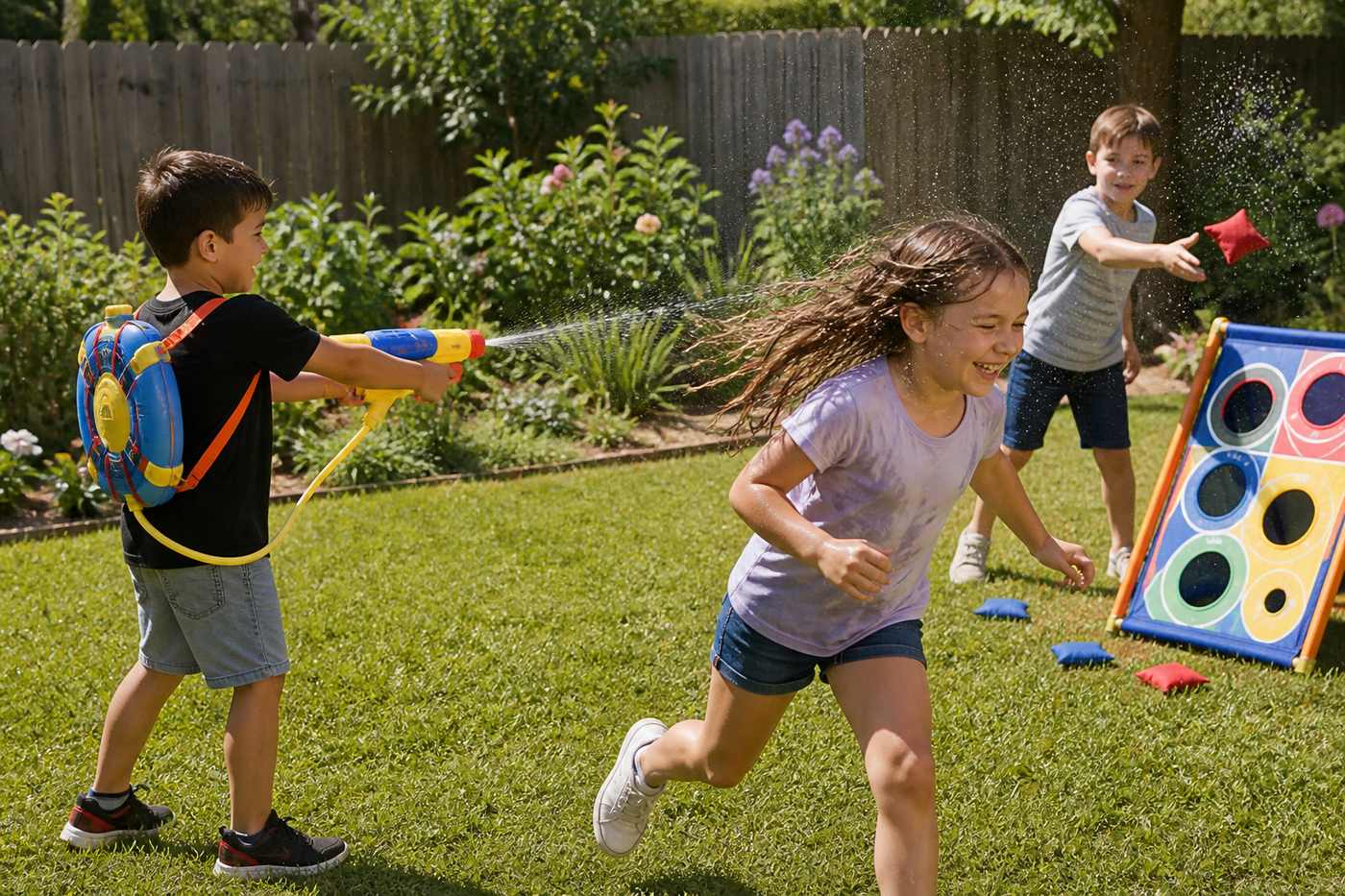
Outdoor and sand toys deliver volume in spring and summer and pair naturally with yard game assortments. The category fails on environmental exposure: UV fade on colorants, wall-thickness weakness at stress points, and brittleness after a season outdoors. Specify UV-stabilized colorant and minimum wall thickness at handles and hinges, and ask what drop test the factory runs.
Pros: high volume, strong seasonal lift, low compliance complexity versus electronics. Cons: bulky cube, seasonal window, and pigment and thickness claims that are easy to make and hard to verify.
Stock it if you can commit container space in the spring window. Do not buy it late and hope to clear it in autumn.
10. Seasonal Novelty and Holiday Toys — Best for Short, Sharp Promotions
Halloween, Christmas, and Easter novelty items remain toys if they are designed or intended for play — seasonal packaging does not waive EN 71 / ASTM F963 / Toy. Buyers who treat holiday items as exempt from testing are the ones who fund the recall.
Pros: fast sell-through, high impulse conversion, easy to theme around existing assortments. Cons: hard expiry date on value, and full testing obligations on a short selling window.
Stock it if you can absorb the test cost on a short-run SKU. Avoid it if your compliance budget only stretches to core lines.
Ten Wholesale Toy Categories at a Glance
| Building blocks and construction sets | Price posture: opening to mid tier; Material: plastic (ABS or substituted PP/HIPS); Age/Use: 3+ with piece-level controls; Best for: repeat reorders to toy and classroom channels; Rating: top pick |
|---|---|
| Magnetic tiles and magnet sets | Price posture: mid to premium; Material: plastic with magnet inserts; Age/Use: age grade set by magnet and small-part rules; Best for: gift-led retail with margin headroom; Rating: strong |
| STEM and science kits | Price posture: mid tier; Material: mixed, often wood plus plastic components; Age/Use: usually school-age; Best for: educational and institutional repeat buyers; Rating: strong |
| Plush and soft toys | Price posture: opening to mid tier; Material: fabric and fill, OEKO-TEX certified fabric options; Age/Use: all ages with fiber and small-part controls; Best for: low-MOQ entry and impulse gifting; Rating: strong |
| RC vehicles | Price posture: mid tier; Material: plastic and electronics; Age/Use: age grade plus battery rules; Best for: concentrated gift-season promotions; Rating: conditional on timing |
| Die-cast and model vehicles | Price posture: opening tier; Material: die-cast metal with plastic parts; Age/Use: 3+ with paint and small-part tests; Best for: small-cube volume filler; Rating: steady |
| Dolls and doll accessories | Price posture: opening to mid tier; Material: plastic and fabric; Age/Use: age grade plus accessory fit controls; Best for: accessory attach-rate programs; Rating: strong with program commitment |
| Board games and puzzle games | Price posture: opening to mid tier; Material: paper, board, plastic components; Age/Use: age grade plus localized text; Best for: non-seasonal year-round pull; Rating: steady |
| Outdoor and sand toys | Price posture: opening tier; Material: plastic, UV-stabilized colorant recommended; Age/Use: warm-season play; Best for: spring and summer volume; Rating: seasonal |
| Seasonal novelty and holiday toys | Price posture: opening tier; Material: varies by spec; Age/Use: full toy rules apply despite seasonal packaging; Best for: short promotions with tested short runs; Rating: timing-dependent |
Where Are These Toy Categories Typically Produced?
Sourcing region should follow material, because each cluster has built its tooling, labor, and supply chain around one material type. Injection-molded plastic toys concentrate in Chenghai in Shantou, Guangdong, where mold shops, colorant suppliers, and assembly lines sit within a short drive of each other. Wooden toys cluster in Yunhe, Zhejiang, where the local supply base is built around woodworking, sanding, and water-based finishing. Plush and soft toys concentrate in Yangzhou, Jiangsu, where fabric, stuffing, and sewing capacity are established. General merchandise — mixed plastic novelties, small housewares-adjacent toys, and low-complexity assortment fillers — is most easily assembled in Yiwu, Zhejiang, where the market supports small-batch and mixed-category orders.
Match the cluster to the material and the tooling you actually need. A Chenghai mold shop is the wrong partner for a plush program, and a Yiwu trader is the wrong partner for a proprietary connector design.
Which Material and Test Should You Ask For by Use Case?
| Toddler and preschool building play | Ask for: PP or HIPS where rigidity is not structural; Request test: piece-size, connection force, edge and point, plus ASTM F963 / EN71 mechanical and heavy metals |
|---|---|
| Magnet-based construction play | Ask for: encapsulated magnet inserts with retained retention spec; Request test: magnet flux and retention, small-part, plus destination magnet standard |
| Classroom and STEM instruction | Ask for: component-level bill of materials with no unapproved substitutions; Request test: full kit mechanical and chemical testing on the final configuration |
| Plush and comfort items | Ask for: unbranded OEKO-TEX certified fabric and documented fill; Request test: flammability, fiber and stuffing composition, heavy metals, seam strength |
| Battery-powered ride and RC play | Ask for: battery configuration, charger type, and shipping documentation; Request test: electrical safety, battery transport documentation, plus toy mechanical and chemical tests |
| Outdoor and sand play | Ask for: UV-stabilized colorant and minimum wall thickness at stress points; Request test: UV exposure, drop and impact, plus standard toy mechanical and heavy metals |
| Holiday and seasonal novelty | Ask for: confirmation that seasonal packaging does not change the toy classification; Request test: full EN 71 / ASTM F963 / Toy package as for any core toy |
How We Picked These Ten Categories
Ranking here is a stocking judgment, not a market-share claim. No verified wholesale sales dataset was available to us, so we did not rank by revenue or unit volume, and we did not assign any factory a number-one position. Instead we scored each category against six buyer-side criteria: MOQ accessibility, FOB price band positioning, OEM/ODM flexibility including material substitution and packaging change, shipping cube and weight efficiency, seasonality concentration of demand, and reorder reliability based on how stable the category's demand pattern is rather than how exciting it is this quarter.
Compliance was treated as a pass-or-fail gate rather than a score. A category that cannot be documented against EN71, ASTM F963, and Toy — including tracking labels and the relevant 16 CFR provisions — does not belong in a first container order regardless of margin.
Two limitations apply. First, the tariff environment for Chinese toys in 2026 is in flux due to active litigation, so landed-cost figures should be modeled as scenarios rather than fixed rates. Second, per-SKU MOQ and pricing varies by factory, material, and packaging; the bands used here are directional and must be confirmed in an RFQ before you size a purchase order.
FAQ for Importers and Wholesale Buyers
What MOQ should I expect for a custom plastic toy order?
Plan around 3,000–10,000 units per SKU for plastic toys and 1,000–5,000 for plush, with blended-container orders able to reduce per-SKU minimums to roughly 1,500–2,000 units. Confirm the exact figure in the RFQ, because MOQ moves with mold ownership, material, and packaging format.
Does seasonal packaging exempt a holiday toy from EN71, ASTM F963, or Toy?
No. Halloween, Christmas, and Easter novelty toys remain toys if they are designed or intended for play, and seasonal packaging does not waive EN 71, ASTM F963, or Toy. Budget the full test package for short-run holiday SKUs exactly as you would for a core line.
How much should I budget for testing per SKU in 2026?
ASTM F963 mechanical/physical, flammability, and heavy metals testing costs roughly $600–$1,200 per SKU at a Toy lab. Treat that as a per-revision cost, not a one-time cost, because any material or structural change invalidates existing reports.
What is the fastest cost reduction that does not require new tooling?
Material substitution in non-structural parts — virgin ABS to engineered PP or HIPS — is cited at 8–15% raw material savings without redesigning molds, and packaging re-engineering such as collapsible boxes, flat-pack inserts, and eliminating PVC blisters often cuts volumetric weight 20–30%. Both must be followed by updated third-party testing.
How should I model Section 301 tariffs for a 2026 toy container?
Build three scenarios — baseline, escalation to a full 25%, and exclusion at 0% or a reduced rate — because Section 301 treatment of Chinese toys remains in flux due to active litigation. Do not bake a single rate into your margin calculation and assume it holds.
Which questions separate a capable toy factory from a broker?
Ask for redacted SMETA, BSCI, or ICTI audits, a line-item cost breakdown, mold steel grade and guaranteed shot life (S136 for high volume, H13 for engineering resins), and written clarification of FOB terms including local charges. A factory that answers these in specifics is a factory; one that deflects is a trader.
How do I validate a category before committing to a full container?
Order samples from at least two factories in the relevant material cluster, test the final configuration rather than a golden sample, and run a blended-container trial at the reduced per-SKU minimum before scaling. Confirm certification reports, packaging cube, and reorder lead time in writing at the same time.
Sources
Related Products & Categories
Request a Quote
If you are building a 2026 assortment across plastic, plush, wooden, or mixed-category toys and want stock and OEM options quoted against your target market, send your category list, destination country, and target retail price band. We will come back with available specifications, MOQ, and the certification documents relevant to your market so you can compare landed cost rather than FOB price alone.